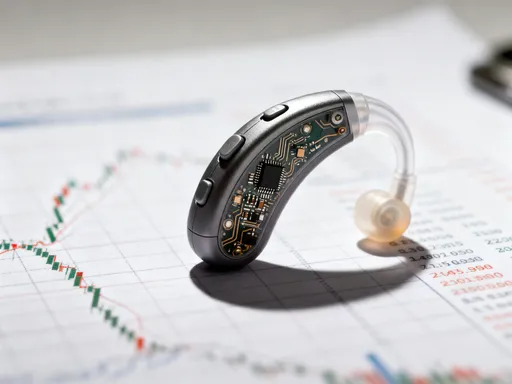
What if your hearing aid investment isn’t saving money—but quietly losing it? I’ve seen firsthand how easily people fall into costly mistakes, from overpaying for features they don’t need to trusting the wrong providers. The hearing healthcare market is booming, but without smart navigation, you could waste thousands. Let’s break down the real pitfalls hiding behind the numbers and how to protect your wallet while making a sound financial decision.
The Rising Cost of Silence
Hearing loss is no longer a quiet issue—its financial toll is growing louder every year. Millions of adults over 50 are discovering that untreated hearing difficulties affect more than just conversations; they impact job performance, social engagement, and even long-term cognitive health. As awareness spreads, so does demand for solutions. Hearing aids, once seen as a niche medical device, are now viewed as essential tools for maintaining independence and quality of life. This shift has transformed the market into a high-stakes financial decision for families, particularly those managing fixed incomes.
The aging population is a key driver behind this surge. With life expectancy rising and baby boomers entering their later years, the number of people experiencing age-related hearing decline is expected to grow significantly over the next decade. According to global health estimates, more than one in three adults over 65 experience some degree of hearing impairment. As this demographic expands, so does the economic pressure to find effective, affordable interventions. Yet, despite increased demand, prices have not dropped—they’ve climbed. Unlike other consumer electronics that become cheaper with scale, hearing aids remain stubbornly expensive, often costing thousands of dollars per pair.
Another major shift has been the move from strictly medical channels to consumer-driven purchasing. In the past, hearing aids were almost exclusively dispensed through audiologists or ENT specialists, making access slow and costly. Today, regulatory changes and technological advances have opened the door to over-the-counter (OTC) models and online retailers. While this promises greater choice and lower prices, it also introduces new risks. Consumers now face a fragmented marketplace filled with varying quality, unclear claims, and confusing terminology. Without guidance, it’s easy to mistake marketing hype for medical necessity, leading to overspending on features that offer little real-world benefit.
This growing complexity means that hearing aid investment is no longer just about health—it’s about financial literacy. Families must weigh upfront costs against long-term value, understand what services are included, and recognize when they’re being upsold. The stakes are high: a poor financial decision today can lead to years of unnecessary spending, while a smart one supports both hearing health and budget stability. As the line between healthcare and consumer product blurs, so does the need for vigilance.
Why the Hearing Aid Market Is Different
The hearing aid industry operates unlike most other health technology markets, and that difference is felt directly in the wallet. At its core, the market suffers from limited competition. A small number of multinational manufacturers dominate global supply, controlling over 80% of the devices sold worldwide. This concentration reduces price pressure and limits innovation aimed at affordability. Unlike smartphones or fitness trackers—where competition drives rapid improvement and falling prices—new hearing aid models often come with incremental upgrades and higher price tags.
Regulatory barriers further restrict competition. Until recently, hearing aids could only be sold by licensed professionals after a medical evaluation. While the introduction of OTC hearing aids in certain regions has begun to ease access, many consumers still navigate a system designed to keep prices high. Audiologists, who traditionally fit and sell devices, often work under exclusive agreements with manufacturers. These arrangements mean they earn commissions or incentives for recommending specific brands, creating a conflict of interest. As a result, patients may be steered toward more expensive models—even when a simpler, lower-cost option would suffice.
The bundled service model also plays a significant role in inflating costs. When you purchase a hearing aid through a clinic, the price typically includes not just the device but also fitting sessions, follow-up adjustments, cleaning supplies, and software updates. On the surface, this seems convenient. But in practice, it makes cost comparison nearly impossible. One provider might charge $3,000 for a device with “comprehensive care,” while another offers the same model for $2,000 with à la carte services. Because the total cost isn’t broken down, consumers can’t tell whether they’re paying for value or padding.
Compare this to the eyeglasses market, where you can buy lenses and frames separately, compare prices online, and choose your preferred level of service. Or consider how diabetes management tools like glucose monitors have seen price competition from direct-to-consumer brands. In those markets, transparency and choice have driven better value. The hearing aid industry has been slower to evolve, leaving many consumers vulnerable to overcharging. Without clear pricing standards or independent verification, the burden falls on individuals to decode the system themselves—a challenge for anyone, especially those already dealing with hearing difficulties.
The Price Illusion: What You Pay vs. What It’s Worth
One of the most misleading aspects of hearing aid shopping is the assumption that higher price equals better performance. In reality, the relationship between cost and value is far less predictable. Two devices with nearly identical technical specifications can vary by thousands of dollars based on branding, distribution channel, or bundled services. This pricing inconsistency creates a false sense of hierarchy, where consumers believe they must pay more to get quality—when often, they’re simply paying for marketing and exclusivity.
Breaking down the actual cost components reveals how much of the price goes beyond the physical device. A typical hearing aid includes miniature hardware—microphones, processors, batteries—and sophisticated software that adapts to different listening environments. The manufacturing cost of these components has decreased significantly due to advancements in microelectronics. Yet retail prices have not followed the same trend. Instead, much of the final cost reflects professional markup, distribution fees, and service packages that may not be fully utilized.
Consider a real-world example: two behind-the-ear models from different providers, both using similar digital signal processing and noise reduction technology. One is sold through a private audiology clinic for $3,200 per pair, including six months of follow-up visits. The other, available online from a direct-to-consumer brand, costs $1,400 and offers remote support via app. The core technology is comparable, yet the price difference exceeds 100%. Where does the extra money go? Often, it funds overhead, commissions, and brand loyalty programs rather than superior performance.
This illusion of value is reinforced by terminology that confuses rather than clarifies. Terms like “premium,” “advanced,” or “next-generation” are used liberally, even when the underlying features offer marginal improvements. For instance, a device advertised as having “AI-powered sound optimization” might simply adjust volume based on ambient noise—a function available in lower-tier models under different names. Without technical expertise, consumers rely on provider recommendations, which may not always align with financial prudence.
To combat this, buyers need to focus on measurable outcomes rather than marketing claims. Does the device improve speech clarity in noisy environments? Is it comfortable for daily wear? Can it connect reliably to phones or TVs? These functional benefits matter more than abstract labels. By prioritizing performance over prestige, families can avoid paying for perceived value that doesn’t translate into real-world improvement.
The Big Brands’ Grip on Your Wallet
A handful of global corporations hold an outsized influence over the hearing aid market, and their business strategies directly impact consumer spending. Companies like Sonova, Demant, and WS Audiology control multiple well-known brands and maintain tight control over distribution, software, and repair networks. This vertical integration allows them to set prices, limit competition, and discourage third-party alternatives. The result is a system where switching brands or repairing devices independently becomes difficult, if not impossible.
One of the most financially restrictive practices is the use of closed-system designs. Most premium hearing aids rely on proprietary software and hardware components that only authorized providers can access. If a device needs recalibration or a software update, users must return to the original seller or a certified clinic—often paying for another appointment even if no new issues exist. This creates a recurring revenue stream for providers while locking consumers into long-term dependency.
Repair options are similarly limited. Unlike consumer electronics, where third-party shops can replace batteries or fix common malfunctions, hearing aids are often treated as sealed units. Attempting independent repair can void warranties or disrupt delicate internal components. As a result, minor issues like moisture damage or earwax buildup may require full replacement—a cost that can reach hundreds of dollars. Some insurers cover replacements after a waiting period, but deductibles and limitations still leave families paying out of pocket.
Interoperability is another overlooked issue. Most hearing aids do not work seamlessly across brands or with non-compatible accessories. A user who buys a wireless streaming device from one manufacturer cannot typically use it with hearing aids from another, forcing redundant purchases. Even charging systems differ—some use proprietary docks, others require specific cables. This lack of standardization increases long-term ownership costs and discourages switching to more affordable options later.
These practices benefit manufacturers by ensuring repeat business and brand loyalty, but they come at a financial cost to users. By understanding these structural constraints, consumers can make more strategic choices—such as selecting models with longer warranties, open-platform compatibility, or direct manufacturer support—to reduce future expenses.
Overlooked Alternatives That Save Real Money
While traditional hearing aids remain the standard for moderate to severe hearing loss, there are now viable alternatives that offer meaningful benefits at a fraction of the cost. Personal sound amplification products (PSAPs) and direct-to-consumer hearing aids have emerged as practical options for individuals with mild hearing difficulties or situational challenges, such as following conversations in restaurants or hearing doorbells at home.
PSAPs are not medical devices and are not intended to treat diagnosed hearing loss. However, for people with early-stage hearing changes, they can provide noticeable improvement in daily listening. Modern PSAPs come with digital noise reduction, directional microphones, and Bluetooth connectivity—features once reserved for high-end hearing aids. Priced between $100 and $500, they represent a low-risk way to test whether amplification helps before committing to a full hearing aid purchase.
Direct-to-consumer hearing aids, approved for mild to moderate hearing loss, bridge the gap between PSAPs and traditional devices. Sold online by companies that offer remote hearing tests and app-based fitting, these models eliminate many overhead costs associated with in-person clinics. Users can complete a hearing assessment at home, receive devices by mail, and adjust settings using smartphone apps. Some brands even offer free trial periods, allowing people to evaluate performance without financial risk.
Studies have shown that for many users, these alternatives perform comparably to clinic-fitted devices in everyday situations. A 2023 clinical review found that direct-to-consumer hearing aids improved speech understanding in noise by an average of 25%, a gain similar to entry-level prescription models. While they may lack the personalized fine-tuning of professional fittings, they offer sufficient benefit for many lifestyles—especially when combined with self-management tools.
The key is matching the solution to the need. For someone with progressive hearing loss requiring precise calibration, a professionally fitted device remains the best choice. But for others—especially those hesitant to start the process or managing budget constraints—these alternatives provide a financially responsible entry point. Exploring them doesn’t mean compromising on health; it means being intentional about spending.
Hidden Fees and the Service Trap
Even when the sticker price seems clear, hearing aid purchases often come with hidden financial obligations. Mandatory fitting appointments, non-refundable service fees, and restrictive replacement policies can add hundreds—or even thousands—to the total cost over time. These fees are rarely highlighted upfront, leaving consumers surprised by ongoing expenses long after the initial purchase.
One common trap is the non-itemized service bundle. Many clinics charge a single fee that covers the device and a year of follow-up care. While this appears comprehensive, it can penalize those who don’t use all the included services. For example, a patient who adjusts quickly and needs only one or two visits still pays the same as someone requiring monthly check-ins. There’s typically no option to opt out of unused services or receive a refund for unspent care. This one-size-fits-all model prioritizes provider revenue over consumer flexibility.
Software updates and remote programming are increasingly billed as premium services. Some manufacturers require annual subscription fees to maintain access to the latest features or app connectivity. Others lock essential functions—like volume control or program switching—behind paywalls unless users enroll in a service plan. These practices turn what should be a one-time purchase into a recurring expense, eroding long-term affordability.
Insurance markups also contribute to hidden costs. While some health plans offer hearing aid benefits, they often partner with specific providers who inflate prices to offset administrative fees. A device that retails for $2,000 might be listed at $3,000 through an insurance network, with the plan covering only a portion. The patient ends up paying more out of pocket than if they had bought directly. Additionally, many policies impose waiting periods, annual limits, or restrictions on brand choice, reducing real-world value.
To avoid these traps, consumers should ask detailed questions before purchasing: What exactly is included in the price? Are follow-up visits truly necessary? Can services be unbundled? Is there a trial period with full refund if unsatisfied? By demanding transparency and negotiating terms, families can protect themselves from unnecessary financial strain.
Smart Moves for Smarter Spending
Making a sound financial decision about hearing aids starts with preparation. The first step is understanding your specific needs. Not all hearing loss requires the most advanced technology. A thorough hearing evaluation—whether conducted in person or through a validated online test—can help determine the appropriate level of amplification. From there, comparing options across multiple channels—clinics, online retailers, and hybrid providers—allows for meaningful price and feature analysis.
Timing also matters. Many providers offer promotions around holidays or at the end of the fiscal year, when they’re eager to meet sales targets. Waiting for these windows can yield significant savings. Additionally, some manufacturers release new models in the spring or fall, which often leads to discounts on previous versions. Being patient and informed about product cycles can turn timing into a financial advantage.
When comparing devices, look beyond the initial price. Consider the total cost of ownership: expected lifespan, warranty coverage, repair policies, battery or charging expenses, and software access. A $1,800 hearing aid with a three-year warranty and free remote support may offer better value than a $1,500 model with a one-year warranty and pay-per-update pricing. Long-term projections help reveal true affordability.
Independent research is essential. Reputable review sites, consumer advocacy groups, and clinical studies can provide unbiased insights into performance and reliability. Don’t rely solely on provider recommendations—especially if they’re tied to commission structures. Trial periods, when available, offer the best form of due diligence. Wearing a device in real-life settings—during family dinners, phone calls, or walks in the park—reveals how well it meets daily needs.
Finally, remember that financial caution and health responsibility are not opposites. Avoiding overspending doesn’t mean settling for subpar care. It means being strategic, asking questions, and refusing to accept inflated prices as inevitable. With the right approach, it’s possible to protect both your hearing and your financial well-being.
Investing in hearing health is essential, but it shouldn’t come with blind financial risk. The market’s complexity creates perfect conditions for overspending—if you don’t know what to watch for. By understanding the structural pitfalls, recognizing inflated value, and exploring smarter alternatives, you can protect your hearing and your wallet at the same time. True financial wisdom lies not in spending less, but in spending right.