Ever feel like you’re getting enough sleep but still wake up exhausted? You’re not alone. Millions struggle with sleep quality—not just quantity. Thanks to modern health monitoring, we can now track more than just hours slept. From heart rate variability to movement patterns, hidden insights are reshaping how we understand rest. This article dives into the science behind sleep quality and how tracking your body’s signals can lead to real, noticeable improvements—no hype, just facts.
The Hidden Problem: Why Good Sleep Feels Out of Reach
Many people believe that logging eight hours in bed equals a good night’s sleep. Yet, despite meeting this benchmark, countless individuals wake up feeling groggy, unfocused, and emotionally drained. The root of this disconnect lies in the difference between sleep duration and sleep quality. Duration measures time, but quality reflects how effectively the body and brain restore themselves during that time. A full night in bed doesn’t guarantee deep, uninterrupted rest—the kind that repairs tissues, consolidates memories, and resets emotional balance.
Common signs of poor sleep quality include persistent fatigue, difficulty concentrating, mood swings, and a general sense of being overwhelmed by daily tasks. These symptoms often stem from disruptions in the natural sleep cycle, particularly interference with slow-wave (deep) sleep and rapid eye movement (REM) stages. Deep sleep is essential for physical recovery—muscle repair, immune function, and hormone regulation—while REM sleep supports cognitive processing, emotional resilience, and creativity. When either stage is fragmented or shortened, the body fails to complete its nightly maintenance routine.
Modern lifestyles are a major contributor to this widespread issue. Constant exposure to artificial light, especially blue light from screens, suppresses melatonin, the hormone that signals it’s time to sleep. Stress, irregular schedules, and late-night eating further misalign the body’s internal clock, making it harder to fall asleep and stay in restorative phases. Even seemingly harmless habits—like checking emails before bed or keeping the bedroom too warm—can subtly degrade sleep architecture over time. The result is a cycle of fatigue that persists despite adequate time in bed, leaving many feeling frustrated and powerless to change it.
How Science Defines Sleep Quality
Sleep quality is not a vague or subjective experience—it is a scientifically defined concept rooted in measurable physiological processes. Researchers assess sleep quality using several key criteria: sleep latency (how long it takes to fall asleep), sleep continuity (how often you wake up), sleep architecture (the balance of sleep stages), and alignment with the circadian rhythm (your body’s 24-hour biological clock). Together, these components determine whether sleep is truly restorative.
Sleep latency is considered optimal when it falls between 10 and 20 minutes. Falling asleep instantly may indicate severe sleep deprivation, while taking more than 30 minutes can signal stress, anxiety, or poor sleep hygiene. Sleep continuity refers to the ability to stay asleep throughout the night. Frequent awakenings—even brief ones—interrupt the progression through sleep cycles and reduce the time spent in deep and REM sleep. Fragmented sleep prevents the brain from completing essential memory consolidation and emotional processing tasks.
Sleep architecture is perhaps the most critical factor. A healthy night includes multiple cycles of four stages: light sleep (N1 and N2), deep sleep (N3), and REM sleep. Each cycle lasts about 90 minutes, and the distribution shifts across the night. Early in the night, deep sleep dominates, supporting physical recovery. Later, REM periods lengthen, aiding mental clarity and emotional regulation. Disruptions in this pattern—such as reduced deep sleep due to alcohol consumption or elevated stress hormones—can leave you feeling unrested even after eight hours.
Circadian alignment ensures that sleep occurs at the right biological time. The body’s internal clock is influenced by light exposure, meal timing, and activity levels. When sleep is misaligned—such as in shift work or chronic late-night habits—the quality deteriorates, even if duration is maintained. Clinical studies using polysomnography, the gold standard in sleep measurement, confirm that high-quality sleep is characterized by timely onset, minimal interruptions, balanced stage distribution, and synchronization with natural rhythms. These objective markers underscore that sleep is not just about time—it’s about timing, depth, and consistency.
The Rise of Health Monitoring: From Labs to Wrists
For decades, understanding sleep required a visit to a sleep laboratory, where patients were connected to multiple sensors in a process called polysomnography. This method records brain waves (EEG), eye movements (EOG), muscle activity (EMG), heart rate, and breathing patterns. While highly accurate, it is expensive, inconvenient, and doesn’t reflect natural sleep environments. The data was rich, but access was limited to those with diagnosed sleep disorders.
The past decade has seen a revolution in sleep tracking, thanks to wearable technology. Smartwatches, fitness bands, and sleep rings now bring biometric monitoring into everyday life. These devices use a combination of sensors—accelerometers to detect movement, photoplethysmography (PPG) to measure heart rate and blood oxygen, and temperature sensors—to estimate sleep stages and overall sleep quality. Unlike lab equipment, wearables allow continuous, long-term tracking in the comfort of home, offering users a more comprehensive picture of their sleep patterns over weeks or months.
While consumer devices are not as precise as clinical tools, they provide valuable trend data. For example, they can show whether deep sleep is consistently low, whether heart rate remains elevated at night, or whether waking episodes are increasing over time. This information empowers individuals to recognize patterns linked to lifestyle choices—such as drinking coffee late in the day or exercising too close to bedtime. Over time, these insights can prompt meaningful changes, such as adjusting bedtime routines or reducing screen exposure.
However, it’s important to understand the limitations of wearable trackers. They estimate sleep stages based on movement and heart rate, not brain activity, so their accuracy varies. They may misclassify quiet wakefulness as light sleep or fail to distinguish between deep sleep and REM. Despite these shortcomings, their greatest strength lies in consistency—tracking the same person over time allows for personalized baselines and trend identification. When used as a tool for self-awareness rather than absolute truth, wearables can play a constructive role in improving sleep health.
What Your Body Tells You at Night (And Why It Matters)
During sleep, the body communicates through a series of measurable signals that reflect its internal state. These biometrics—heart rate variability (HRV), respiratory rate, blood oxygen saturation (SpO2), and skin temperature—offer a window into how well the body is recovering. Unlike subjective feelings of tiredness, these metrics provide objective evidence of physiological balance or strain.
Heart rate variability is one of the most insightful markers. HRV measures the variation in time between heartbeats, reflecting the balance between the sympathetic (fight-or-flight) and parasympathetic (rest-and-digest) branches of the nervous system. Higher HRV indicates greater resilience and recovery capacity, while lower HRV suggests stress, overexertion, or poor sleep quality. A consistent decline in nighttime HRV may signal that the body is not fully recovering, even if total sleep time appears sufficient. Athletes and busy professionals alike use HRV trends to adjust training loads and manage stress.
Respiratory rate, or the number of breaths per minute during sleep, also provides important clues. A normal resting respiratory rate ranges from 12 to 20 breaths per minute. Elevated rates can indicate poor sleep quality, anxiety, or even undiagnosed respiratory issues like sleep apnea. Slow, regular breathing is associated with deeper relaxation and better oxygen delivery to tissues. Some advanced trackers can detect irregular breathing patterns, prompting users to seek medical evaluation if abnormalities persist.
Blood oxygen saturation is another critical metric, particularly for those with respiratory conditions. Healthy SpO2 levels remain above 95% throughout the night. Drops below 90% may indicate obstructive sleep apnea, where breathing pauses temporarily due to airway blockage. Wearables with pulse oximetry can flag these events, enabling early intervention. Similarly, skin temperature trends can reveal circadian alignment—core body temperature naturally drops during sleep, and deviations may signal disrupted rhythms or illness onset.
Together, these biometrics form a comprehensive picture of nocturnal health. They transform sleep from an invisible process into a trackable, improvable function. By paying attention to these signals, individuals gain insight into how lifestyle, stress, and environment shape their rest—information that can guide more informed decisions about health and well-being.
Turning Data Into Action: Practical Adjustments That Work
Access to sleep data is only valuable if it leads to meaningful changes. The power of health monitoring lies in creating a feedback loop: observe a trend, make a change, and measure the outcome. For example, if a wearable shows consistently low deep sleep, simple behavioral adjustments can yield measurable improvements. The key is targeting specific factors that influence the tracked metrics, using science-backed strategies rather than guesswork.
One of the most effective interventions is optimizing the bedtime routine. Going to bed and waking up at the same time every day—even on weekends—strengthens circadian rhythm and improves sleep onset. A wind-down period of 30 to 60 minutes before bed, free from screens and stimulating activities, helps the body transition into rest mode. Engaging in calming practices such as reading, gentle stretching, or mindfulness meditation can reduce nighttime arousal and increase HRV.
Light exposure plays a crucial role in regulating melatonin and cortisol levels. Reducing blue light from phones, tablets, and overhead lighting in the evening supports natural sleep onset. Using dim, warm-colored lights and enabling night mode on devices can make a noticeable difference. Conversely, getting bright natural light in the morning—especially within the first hour of waking—helps reset the circadian clock and improves alertness during the day.
Environmental factors such as room temperature and noise also impact sleep quality. The ideal bedroom temperature for most adults is between 60 and 67 degrees Fahrenheit (15–19°C). A cooler environment supports the natural drop in core body temperature required for deep sleep. Using breathable bedding, blackout curtains, and white noise machines can further enhance comfort and continuity. For those tracking SpO2, ensuring proper ventilation and sleeping position (e.g., side sleeping for those prone to snoring) may improve oxygen levels.
Diet and exercise timing also influence sleep metrics. Avoiding heavy meals, caffeine, and alcohol within three hours of bedtime prevents disruptions in sleep architecture. Alcohol, while initially sedating, fragments sleep later in the night and reduces REM sleep. Regular physical activity, especially aerobic exercise, increases deep sleep—but intense workouts too close to bedtime may elevate heart rate and delay sleep onset. Aligning activity with circadian biology—such as exercising in the morning or afternoon—supports better nighttime recovery.
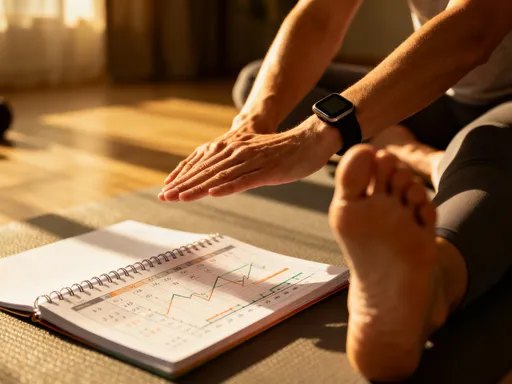
Each of these adjustments can be tested and refined using sleep data. For instance, after implementing a consistent bedtime routine, a user might observe increased deep sleep duration or higher HRV. This evidence-based approach turns sleep improvement into a personalized science, empowering individuals to make choices that are not only intuitive but also measurable.
The Limits of Tracking: When Data Isn’t Enough
While health monitoring offers valuable insights, it is not a substitute for professional medical care. One of the risks of consumer sleep tracking is over-reliance on numbers, which can lead to anxiety or obsession. Some individuals develop “orthosomnia,” a condition where the pursuit of perfect sleep metrics causes stress that ironically worsens sleep. Fixating on a single night’s data or chasing ideal scores can create performance pressure, making it harder to relax and fall asleep naturally.
Another limitation is data interpretation. Wearables provide estimates, not diagnoses. A low HRV reading could result from stress, illness, poor sleep, or even dehydration—without context, it’s difficult to determine the cause. Similarly, frequent awakenings detected by movement sensors might reflect normal brief arousals rather than clinically significant disruptions. Misunderstanding these nuances can lead to unnecessary worry or inappropriate lifestyle changes.
For individuals with persistent symptoms—such as loud snoring, gasping during sleep, excessive daytime fatigue, or unrefreshing sleep despite adequate duration—professional evaluation is essential. Conditions like obstructive sleep apnea, restless legs syndrome, or chronic insomnia require clinical diagnosis and treatment. Polysomnography or home sleep tests, prescribed by a healthcare provider, offer definitive answers that consumer devices cannot provide.
The role of wearables should be seen as complementary, not diagnostic. They are best used to identify trends, support discussions with healthcare providers, and monitor progress during treatment. When concerns arise, the appropriate step is to consult a physician, not to self-diagnose based on a wristband reading. Health technology is a tool for empowerment, but it works most effectively when paired with professional guidance and a balanced mindset.
Building a Sustainable Sleep Future: Mindset Over Metrics
True sleep improvement is not about achieving perfect numbers every night—it’s about cultivating a sustainable relationship with rest. The goal is not to become a data analyst of your own biology, but to use insights wisely to support long-term well-being. Sleep is a reflection of overall health, influenced by stress, lifestyle, environment, and mindset. By combining objective data with personal awareness, individuals can make informed choices that lead to lasting change.
The most effective sleep strategies are those that become natural habits, not temporary fixes. Small, consistent actions—like reducing screen time before bed, maintaining a regular schedule, or creating a restful environment—compound over time. These behaviors, reinforced by data, help the body relearn its natural rhythms. Over months, many users report not only better sleep scores but also increased energy, improved mood, and greater resilience to daily stressors.
Ultimately, the purpose of sleep tracking is not to obsess over every fluctuation, but to foster self-awareness and intentionality. It encourages a shift from passive rest to active recovery—a recognition that sleep is not downtime, but a vital biological process. When approached with patience and balance, health monitoring becomes a bridge between science and self-care, offering clarity without control.
The journey to better sleep is deeply personal. What works for one person may not work for another, and that’s okay. The key is to listen—to both the data and the body. Because real rest is not just measured by a device; it’s felt in the quiet confidence of waking up ready to face the day. By aligning lifestyle with biology and using technology as a guide, not a judge, anyone can unlock the science of sleep and reclaim the rest they deserve.